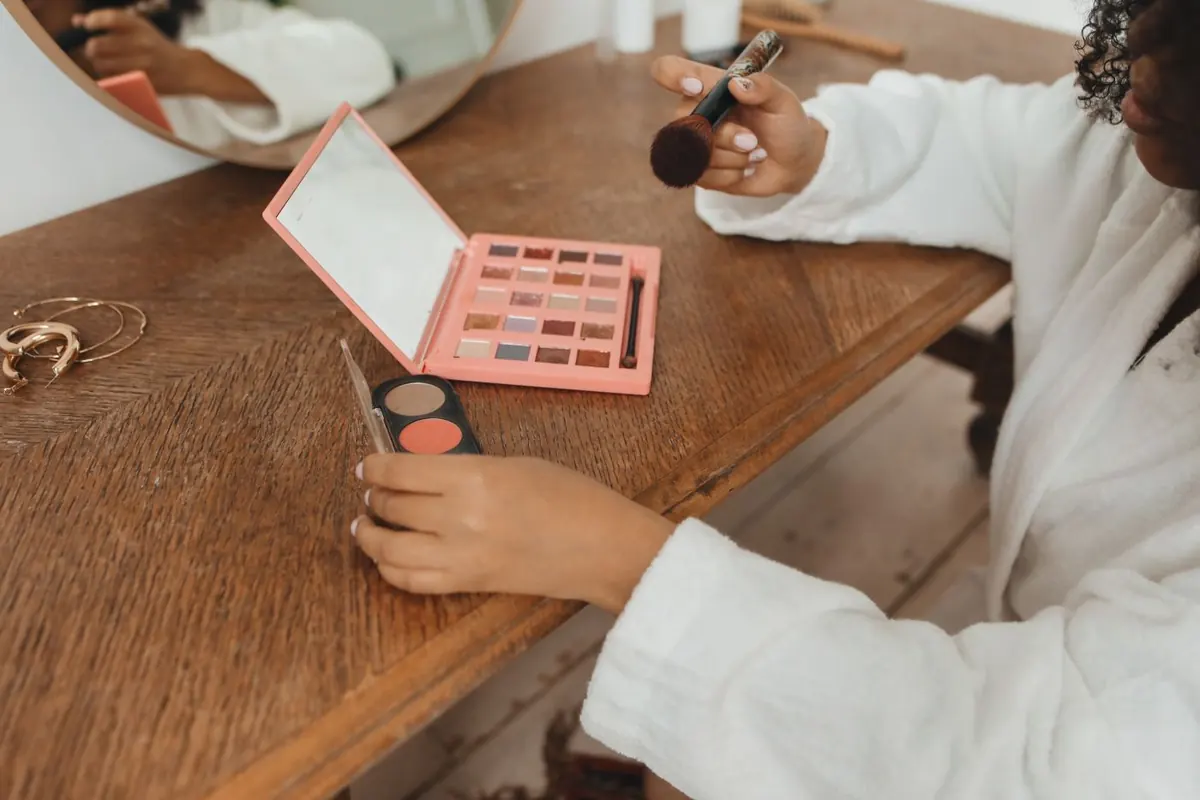
A camera-ready morning is built from a short sequence you repeat without thinking, not from a long list of products or an hour in front of the mirror. The practical answer is to design a routine with three fixed points: a prepared surface, a limited set of visible products, and a decision made the night before. When those three pieces are in place, the first hour feels less reactive, and the small finishing steps take minutes instead of turning into a rush.
The problem: mornings that start with searching
Most rushed mornings have the same cause. You open a drawer, then another, looking for the moisturiser you used yesterday. You try three shirts, change your mind about shoes, and realise your hairbrush is in a bag you have not unpacked. Each decision is small, but together they consume the buffer you needed for the parts of the routine that matter: a calm face, neat hair, and enough time to leave without carrying the stress into the day.
The fix is not to buy more. It is to reduce the number of decisions you make while you are still groggy and to put the remaining decisions where they can be made quickly.
Step 1: Build a single visible tray
Choose the products you use on most days and keep them together on one tray or in one shallow drawer. For many people this means a cleanser, a moisturiser, a sunscreen, one hair product, and one finishing item such as a lip product or a brow pencil. Anything you use occasionally belongs elsewhere.
The tray works because it makes the order obvious. You move from left to right, or from the sink outward, and you do not need to read labels in bad light. It also makes gaps visible: if the sunscreen is nearly empty, you notice before you are standing in a pharmacy at 8:10.
A worked example
Imagine a hypothetical routine for someone who leaves at 8:15. Before, their morning products were spread across the bathroom cabinet, a bedroom drawer, and a handbag. Each morning took about fifteen minutes just to gather what was needed. After moving only the five daily items to one tray and returning everything else to a backup shelf, the same person spends roughly four minutes assembling the sequence because the search has disappeared. The actual skin and hair steps have not changed; the friction around them has.
Step 2: Use a five-minute visible-finish list
A camera-ready look rarely depends on many steps. It depends on a few places that people notice first: even-looking skin, brows that have a clear shape, lips that are not chapped, and hair with an intentional outline. Choose the two or three that matter most to you and make them your standard finish.
- Skin: apply a thin layer of your moisturiser and sunscreen before any colour, then wait a minute so the surface is not slippery.
- Brows: brush them into place with a spoolie before anything else, which is often faster than filling them in.
- Lips: one lip product, applied after the rest of the face so it does not smudge.
- Hair: one pass with a brush or comb to remove the night’s tangles, then one styling product for the shape you actually wear.
The point of the list is to stop at the finish line. Once the core items are done, leave the rest alone.
Step 3: Decide the outfit the night before
Morning clothing decisions are expensive because they happen under time pressure. Choose one complete outfit the evening before, including shoes, bag, and the layer you will take outside. If the weather forecast changes overnight, you can adjust the outer layer, but you do not need to start over.
This works best when the pieces share a limited palette. A small set of colours that work together makes last-minute swaps easy. It is not about having a capsule wardrobe; it is about making the choice you already have faster to see.
Step 4: Protect ten minutes as a buffer
The buffer is the part most routines leave out. Without it, one delayed kettle or missing hair tie turns into a stressful exit. Protect ten unclaimed minutes at the end of the routine for water, a quick check of the weather or your calendar, and a final look in the mirror before leaving.
If the buffer disappears most mornings, the routine is probably too long. Remove one step rather than starting earlier and hoping for the best.
Comparing approaches
| Approach | What it does well | Main trade-off |
|---|---|---|
| Full routine with many products | Covers many possible looks | Slow to assemble and easy to abandon |
| Fixed daily tray with a short finish list | Fast, repeatable and easy to restock | Less room for occasional experiments |
| Improvised mornings | Flexible on busy days | Most decisions are made when rushed |
For most people, the fixed tray with a short finish list is the best starting point. You can still add a specialised product for an event, but it stays outside the daily sequence.
Common mistakes
- Keeping backups on the tray. Spare products crowd the daily items and make the sequence harder to read.
- Adding steps after a good week. A routine that works on Monday can fail on Friday if every addition is kept.
- Skipping the restock check. If you only notice an empty bottle when you need it, the routine has no slack.
- Treating every morning as a test. Choose a stable baseline, then adjust for travel, weather, or work events.
Limitations
This approach organises time and attention; it does not make any product more effective. It also does not replace personal care guidance for skin concerns. If a product irritates your skin or you notice persistent changes, consult a qualified professional rather than adding more steps to your morning.
Questions to ask yourself
- Which three products do I reach for on most days without thinking?
- Which part of my morning reliably takes longer than it should?
- What would I remove if the routine had to fit in ten minutes?
Related resources
Cover: Pexels photograph, used as an editorial illustration. Stock models and products shown do not imply endorsement or independent product testing. Image license.