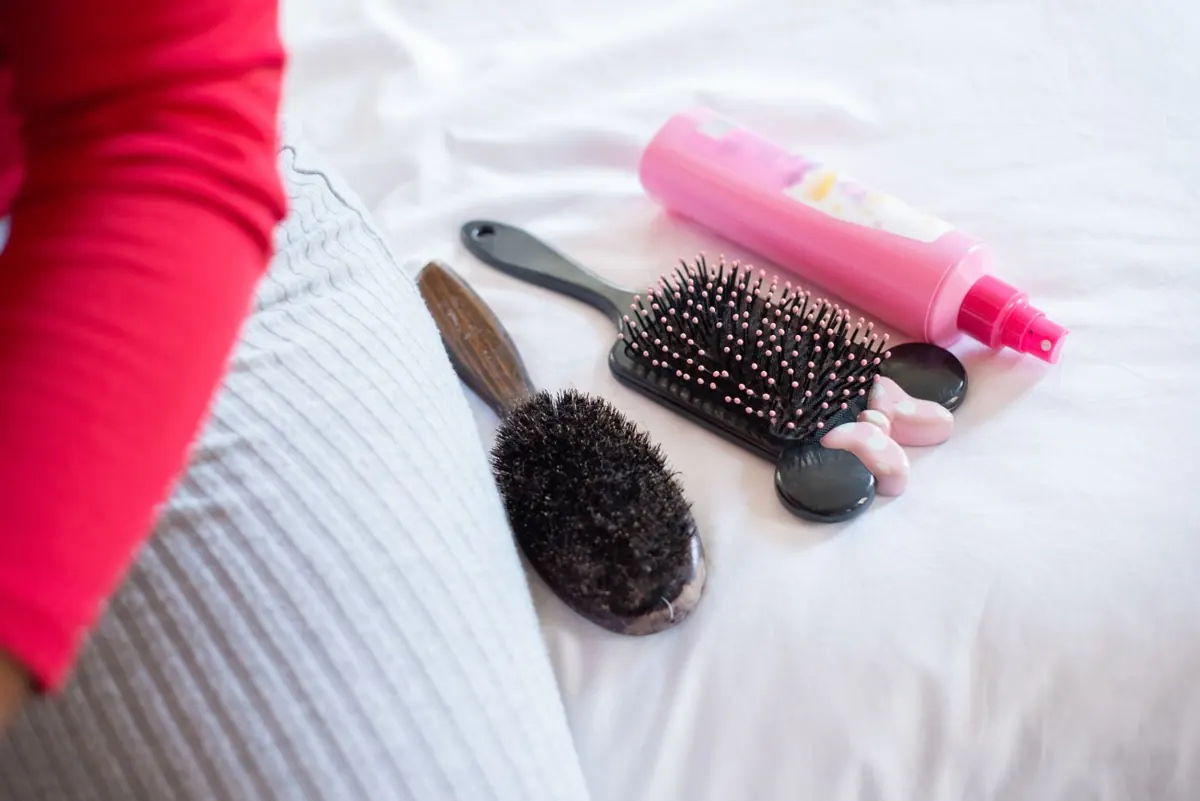
The best hairbrush for most people is the one that matches the hair you have, the tangles you actually get, and the styling you do on a normal day. A brush that looks elegant on a shelf can still pull at wet hair, snag on fine strands, or leave a bulky blowout looking flat. This guide walks through the decisions in the order that matters: what the brush is for, which bristle and head shapes handle which jobs, how to avoid common mistakes, and how to keep a brush clean enough to keep working.
Start with the job, not the look
Before comparing brushes, name the three or four tasks you need it to do. Most people use one brush for everything, and that is where frustration begins. A useful way to sort these tasks is by when they happen:
- Detangling wet or damp hair, usually after washing or conditioning, when strands are most fragile and most likely to stretch.
- Smoothing dry hair for a quick daily pass, which removes loose shed hair and evens out the surface.
- Shaping while blow-drying, where you need tension, heat tolerance and a way to direct roots and ends.
- Finishing and volume, such as lifting roots or smoothing flyaways with a small, precise tool.
A single brush can cover two of these tasks, but rarely all four. If your hair tangles mostly in the shower, a wide, flexible detangler will serve you better than a styling brush with a tight round barrel, no matter how polished the second one looks.
Why bristle type matters more than brush shape
Brush shape gets most of the attention, but the material and spacing of the bristles or teeth determine how the brush feels on the scalp and through the lengths. Three broad families cover most everyday choices:
| Type | Typical use | Main trade-off |
|---|---|---|
| Wide-tooth detangling comb or flexible paddle | Wet hair, curls, coils, long hair | Less smoothing on dry hair; can leave some texture |
| Flat paddle with cushioned pins or boar-style bristles | Daily smoothing and dry-hair polishing | Can snag or drag on tangles if used before detangling |
| Round barrel brush | Blow-drying for curl, bend and root lift | Needs heat-tolerant barrel and steady tension; can cause tangles if the barrel is too tight for your hair length |
Notice that none of these rows says a type is better in general. The right choice depends on your hair’s texture, length and how much heat you use. A material that feels smooth in the hand may still catch fine strands, so check the bristle tips and the gaps between them rather than trusting the appearance in a photo.
Reading the bristles and teeth
Run a fingertip across the working surface. Look for rough edges, sharp points, or pins that stick out at different heights. Hold the brush up to the light: wide, even spacing lets loose hair fall away instead of collecting. Tightly packed bristles grab more hair per stroke, which is useful for smoothing fine hair but can trap shed strands and build up faster between cleanings.
Match the brush to your hair length and texture
Length changes how a brush behaves. On short hair, a large paddle may simply push the hair around without grip, so a smaller brush with more contact is easier to control. On long hair, the main risk is pulling from the ends upward. Start at the bottom, work out small knots, then move up in sections. Hair that is very curly or coily often needs a wide, flexible tool that moves with the curl pattern rather than stretching it.
Consider this example. Imagine someone with shoulder-length, fine, straight hair who uses a dense round brush every morning and notices tangles only after washing. The likely cause is not the brush alone, but the mismatch between a brush designed for blow-drying and the detangling task that happens when hair is wet. Adding a wide-tooth comb for the shower and keeping the round brush for drying solves the problem without buying a new styling system.
Common mistakes with length and texture
- Brushing wet hair with a tight-bristle brush, which can stress and break strands.
- Starting at the roots and pulling through knots, which compounds tangles.
- Using one brush for both very fine hair and very thick hair, when the spacing that suits one is too dense or too open for the other.
Heat, tension and the blow-dry problem
Round barrel brushes add a second variable: heat. A barrel that conducts heat unevenly or holds it too long can make the hair near the scalp hotter than the ends. Check the product information for heat tolerance before using it with a hot dryer. Even when a brush is labeled heat-safe, the principle is simple: keep the brush moving, avoid holding one spot, and lower the dryer temperature if the hair feels rough or smells scorched. Follow the tool manufacturer’s heat guidance and watch the hair itself, since heat tolerance varies by product and hair condition.
Tension is the other half of the equation. Pulling too tightly on the barrel to create smoothness can cause discomfort or breakage, especially on fine or previously damaged hair. Loosen the grip, use shorter sections, and let the dryer do part of the work.
A practical selection routine
- List your top two tasks. Write down the situations where you struggle most: wet detangling, smoothing frizz, volume, or quick touch-ups.
- Choose a primary brush for that task. Pick a brush that does the hardest job well rather than one that claims to do everything.
- Add a second tool only if the gap is real. If you still struggle with one task after a week, consider a second brush, not a third.
- Test on your hair. Use the brush slowly on a section you can see. Watch for pulling, snagging, or hair that stays knotted after two passes.
- Keep a note of what fails. If the brush pulls only at the ends, look at spacing. If it fails at the crown, check whether the head is too large for your sections.
Cleaning keeps the brush doing its job
A dirty brush redistributes oil and product residue back into the hair, which can make tangles and buildup worse. Cleaning guidance for makeup brushes from the American Academy of Dermatology is a related but different tool category; the same general principle of removing residue applies to hairbrushes that collect oil and product from the scalp. Remove loose hair after each use, and wash the brush periodically with a mild shampoo solution, rinsing thoroughly and letting it dry flat so water does not run into the base. Repeated soaking can loosen glued parts in many tools, so check the construction before you immerse anything.
Be careful with cleaning claims. A brush that looks clean may still hold product film that is invisible until it transfers to the hair. Washing on a schedule that fits how often you use styling products is more reliable than waiting for visible buildup.
Limitations to keep in mind
No brush fixes damaged hair, scalp conditions, or a styling method that is pulling too hard. If you notice persistent shedding, scalp discomfort, or breakage that continues despite gentle technique, consider speaking with a dermatologist or other qualified professional. This article focuses on tool choice and everyday handling; it does not diagnose hair or scalp problems or promise specific results from any brush.
Common questions
Should I brush my hair every day?
Brushing once or twice a day is enough for most people. Brushing constantly can add friction, especially on dry hair. Use the brush when the hair needs it rather than as a habit that adds friction.
Can one brush cover everything?
Sometimes, if your hair is medium-length, moderately textured, and you blow-dry lightly. Many people find that one brush covers smoothing but not wet detangling, so a second tool is the practical fix.
Related resources
Cover: Pexels photograph, used as an editorial illustration. Stock models and products shown do not imply endorsement or independent product testing. Image license.