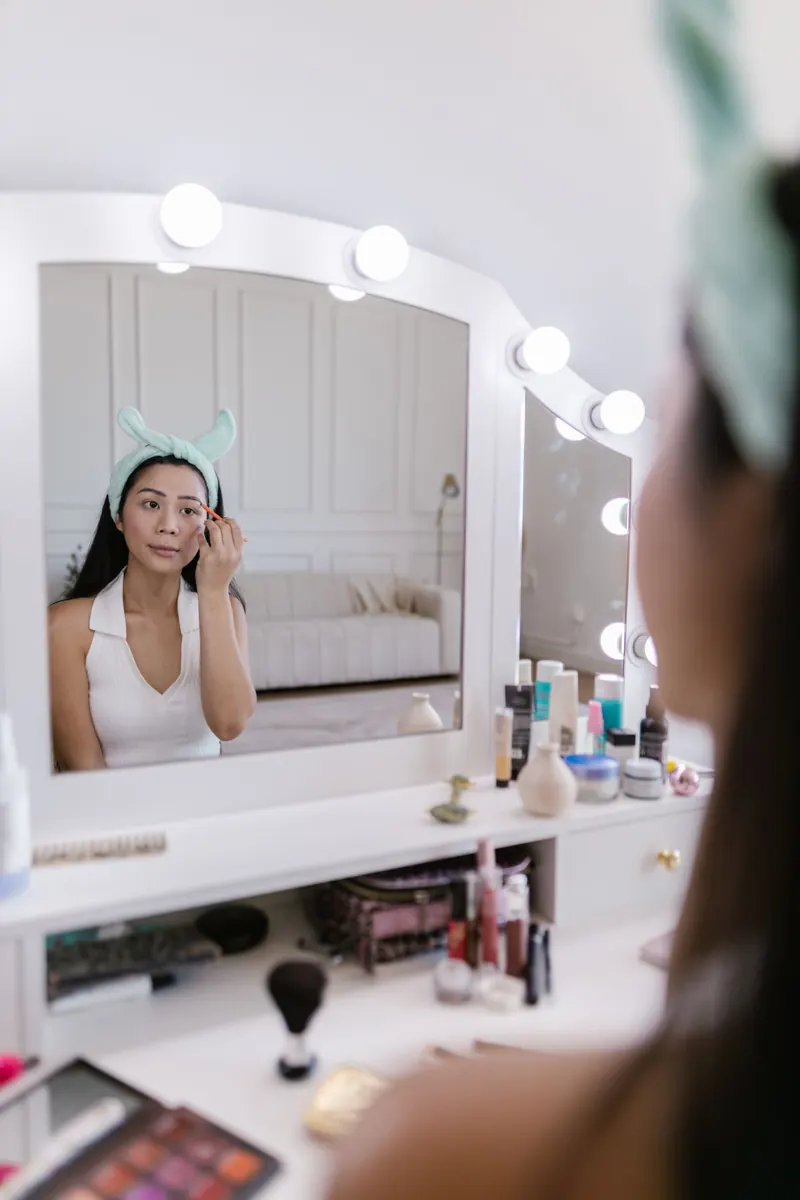
A simple makeup kit for video calls works best when it is built around three things: the products you reach for every day, a small set of tools that cover those products, and a cleaning habit that keeps the tools from becoming a problem. The goal is not to own more, but to make the handful of items you actually use easy to apply quickly and easy to keep in good condition. If your current bag is full of duplicates and half-used samples, start by reducing it, then add back only what your calls require.
Why a video-call kit is different from a general makeup bag
Most people build a makeup bag for a mix of situations: work, events, travel and weekends. A video-call kit has a narrower job. Your face is usually framed from the chest up, the lighting is often a laptop screen or a ring light placed at an uneven angle, and you may need to touch up between meetings with only a few minutes available. That context changes what belongs in the kit.
The main problem readers describe is not a lack of products but a lack of decisions. They open a crowded drawer before a call, cannot find the complexion product they used last week, and apply too much of something because they are rushing. A small, fixed kit removes those decisions. It also keeps the items that matter in one place, so the rest of your collection stays where it belongs.
Start with the questions you are actually answering
Before choosing anything, write down what you want the kit to do during calls. Common answers include: making skin look even on camera, reducing shine, keeping brows or lashes defined, adding a little color to the lips, and tidying up after a long day. Each answer points to a category, not a brand.
- Base: one complexion product that matches your usual coverage level.
- Concealer: one shade, used only where you need it.
- Powder: one product for controlling shine, if your lighting makes skin look oily.
- Brow or eye definition: one pencil or gel, depending on your routine.
- Lip color: one shade that works in both bright and dim light.
- Tools: a small number of applicators matched to those products.
If a category does not appear in your answers, leave it out. A kit with five well-chosen items is more useful than one with fifteen that you never open.
A worked example
Hypothetical example: Imagine someone who has three calls a day, mostly in a bright office with a window behind the camera. Their screen shows shine across the forehead and nose, and their brows look faint. They might choose a light-to-medium base, a small concealer for under the eyes, a translucent powder, a brow pencil in a shade close to their natural hair, and one matte lip color. That is five products. Everything else goes back into the main collection.
Choose the tools that fit the products
Tools matter because they control how much product ends up on your face. A dense brush can make a thin base look heavy. A sponge can leave powder patchy if it is not used lightly. For a call kit, keep the number of tools small and choose shapes that match each job.
| Product type | Practical tool choice | Common mistake |
|---|---|---|
| Liquid or cream base | Damp sponge or a dense flat brush | Applying the full amount at once |
| Concealer | Small precise brush or fingertip | Using too much and drawing attention to the area |
| Powder | Soft medium brush | Pressing hard, which can look cakey on screen |
| Brow pencil | Spoolie to blend | Drawing hard lines that look unnatural at close range |
| Lip color | Fingertip or thin tip | Letting the edges blur into the surrounding skin |
Keep the tools you will actually wash. A large set that you use once a month will collect product residue and bacteria without being cleaned. Fewer tools that are cleaned regularly are safer and easier to manage.
Cleaning is part of the kit, not an afterthought
A kit that is used on video calls is handled often, usually in small spaces like a desk or bathroom counter. That makes tool hygiene worth planning. The American Academy of Dermatology’s guide on cleaning makeup brushes is a useful reference for general hygiene practice. Brushes can collect product residue, oil and dirt over time, so a regular cleaning routine matters. Follow the specific cleaning frequency, drying method and washing steps given on the care instructions for your particular tools, since manufacturers’ advice varies.
For a call kit, a practical schedule is to wipe applicators with a clean tissue after each use and wash them on the recommended cycle. Never share tools with another person. If you notice irritation or breakouts after changing products, a visit to a board-certified dermatologist is a better step than guessing which item is responsible.
Common mistakes that make a kit harder to use
- Keeping duplicates in the kit. Two concealers in similar shades create a decision every morning.
- Choosing products for the wrong lighting. Shimmer that looks pleasant in a store can reflect harshly on camera.
- Stocking products you do not reapply. If you never touch up mid-day, a long-wear product may be unnecessary.
- Ignoring the mirror. If you cannot see your face clearly from your camera angle, you will apply too much or too little. Check your result on a call preview, not only in a bathroom mirror.
- Skipping expiry tracking. Products that are opened and kept in a warm bag change texture and performance. Note the open date on items you use often.
How to assemble and maintain the kit
Put the kit in a case that opens flat or lays out in a single view. Arrange items by order of use: base first, then concealer, powder, brow, and lip. Keep the tools in a separate pocket so they do not pick up pigment from the products. Once a week, check that each item is still in use, replace anything that has dried out or changed smell, and remove samples that never made it into your routine.
Limitations are worth acknowledging. A small kit will not cover every look, and it may need adjusting if your job, lighting or skin changes. Shade matching is personal and depends on your camera and screen, so testing on a call preview is more reliable than trusting labels alone. This guidance is editorial and based on organization principles rather than product testing.
Related resources
Cover: Pexels photograph, used as an editorial illustration. Stock models and products shown do not imply endorsement or independent product testing. Image license.