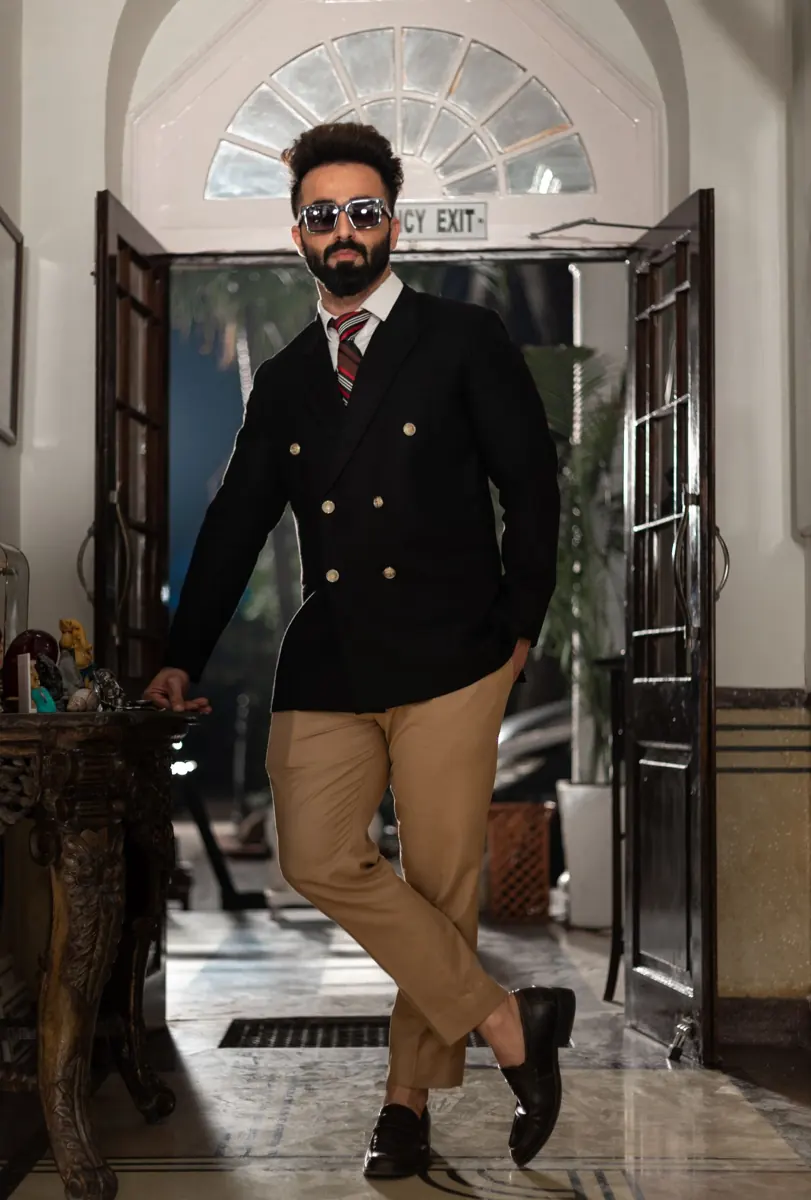
To dress like a public figure without looking costumed, stop copying individual outfits and instead copy the decision system behind them: a fixed silhouette, a narrow palette, and one or two repeated signature details that you choose because they suit your daily life. Costume happens when a look is assembled from someone else’s inventory. It rarely happens when the underlying logic is coherent and the pieces are edited to fit your body, routine and environment.
Why borrowed looks feel like costumes
Most people who try to recreate a well-known look do one of three things. They buy the exact item they saw, they match every element of a photographed outfit, or they adopt a trend that the figure made famous. Each approach tends to fail for a predictable reason. The exact item may not suit your proportions. The full match ignores your commute, weather and work culture. The trend arrives at a moment when it already looks like a reference rather than a choice.
Public figures often operate under conditions most readers do not face. Stylists, fitting appointments, photographers, stage lighting and a predictable schedule can all shape what looks effortless on camera. Your version needs to survive a crowded train, a long meeting, a sudden rain shower and a casual dinner that was not on the plan.
Step 1: write a one-sentence visual brief
Before you shop or reorganise your closet, write one sentence describing the impression you want to leave. Keep it concrete. “Relaxed but precise, mostly neutral, with one sharp detail” is useful. “Iconic and powerful” is not, because it cannot tell you whether to buy a blazer or a hoodie.
Use the sentence as a filter. If an item does not support it, it can still be attractive, but it belongs to a different wardrobe.
Step 2: identify the proportion you are actually copying
Look at several photos of a figure whose style you admire and ignore the individual brands. Ask three questions:
- Is the top looser or tighter than the bottom?
- Where does the jacket or coat end relative to the hip?
- Is the shoe chunky, slim, flat or heeled, and how does that balance the trouser width?
For example, suppose a figure is often photographed in a straight-leg trouser, a short fitted knit and a longer open coat. The reusable idea is the contrast between a long vertical line on the outside and a compact upper body. You can reproduce that with a wool coat, a knit you already own and any trouser that falls cleanly over your shoe. You do not need the same coat or the same brand.
Step 3: build a three-colour working palette
A limited palette is the most reliable way to avoid costume. Costumes often use colours that were chosen for recognition rather than wearability. Your palette should be chosen for combinability.
- Choose one base neutral you wear most often, such as navy, charcoal, camel or off-white.
- Choose one secondary neutral that complements it, such as grey, cream, black or brown.
- Choose one accent you actually enjoy in daylight, not only in photographs.
If you cannot identify an accent you like, skip it. A precise neutral wardrobe with one sharp object reads more modern than an attempted colour story that feels borrowed.
Step 4: pick one signature, not a set of costume markers
A signature can be a watch, a frame shape, a textured bag, a scarf knot or a rolled sleeve. The mistake is to borrow several signatures at once. When a look contains a particular sunglasses shape, a specific scarf, a famous handbag and a copied hairstyle, it becomes a checklist. People notice the checklist before they notice you.
Choose the signature that you would wear even if nobody photographed you. If it feels like a performance on a regular Tuesday, it is probably too theatrical.
Comparison: direct copy versus system copy
| Approach | What you copy | Typical result | Main risk |
|---|---|---|---|
| Direct copy | Exact outfit pieces | Recognisable but stiff | Costume effect and poor fit |
| Trend copy | Current trend from the figure | Current but temporary | Looks dated quickly |
| System copy | Proportion, palette and signature logic | Coherent and adaptable | Takes time to edit well |
Common mistakes
- Buying the photographed item first. Start with fit and proportion, then decide whether the item is necessary.
- Ignoring your setting. A structured look that suits a studio may feel heavy on public transport in summer.
- Adding too many statements. Choose one focal point and let the rest support it.
- Chasing newness. Repetition is part of the effect. If every week needs a new reference, the wardrobe is being driven by content rather than use.
Limitations of this approach
This system is not a guarantee of polish. It can improve consistency, but fit, grooming, posture and tailoring still matter. It also has limits in very formal or regulated settings, where a dress code may override personal preference. If you are dressing for a specific event, check the expected formality before applying the system. Our guide to vague invitations covers that problem in more detail.
A worked example
Imagine a reader who works in a creative office and wants a polished but relaxed look inspired by a public figure known for soft tailoring. Her visual brief is “soft tailoring with one graphic detail.” She identifies the proportion as a slightly oversized jacket over a fitted T-shirt and straight trousers. Her palette becomes navy, grey and white, with a rust accent in a scarf. Her signature is a thin metal watch.
She does not buy the same jacket or scarf. Instead, she tailors a navy jacket she already owns, wears her existing grey trousers and adds the rust scarf only on days when she wants more colour. After two weeks, the outfits look recognisable as her style, not as an imitation. This is an illustrative example, not a record of a specific person’s experience.
Questions to test your wardrobe
- Can I describe my style in one sentence without naming a public figure?
- Do my repeated proportions still work on a wet day, a long day and a casual evening?
- Would I wear this signature detail if no photograph existed?
For a broader look at why some outfits read as expensive without looking staged, see our guide to what makes a public figure’s outfit feel expensive. For general background on keeping knitwear and tailored pieces in good condition, the textile care resource at clevercare.info is a starting point, but always follow the care label on each garment.
Related resources
Cover: Pexels photograph, used as an editorial illustration. Stock models and products shown do not imply endorsement or independent product testing. Image license.