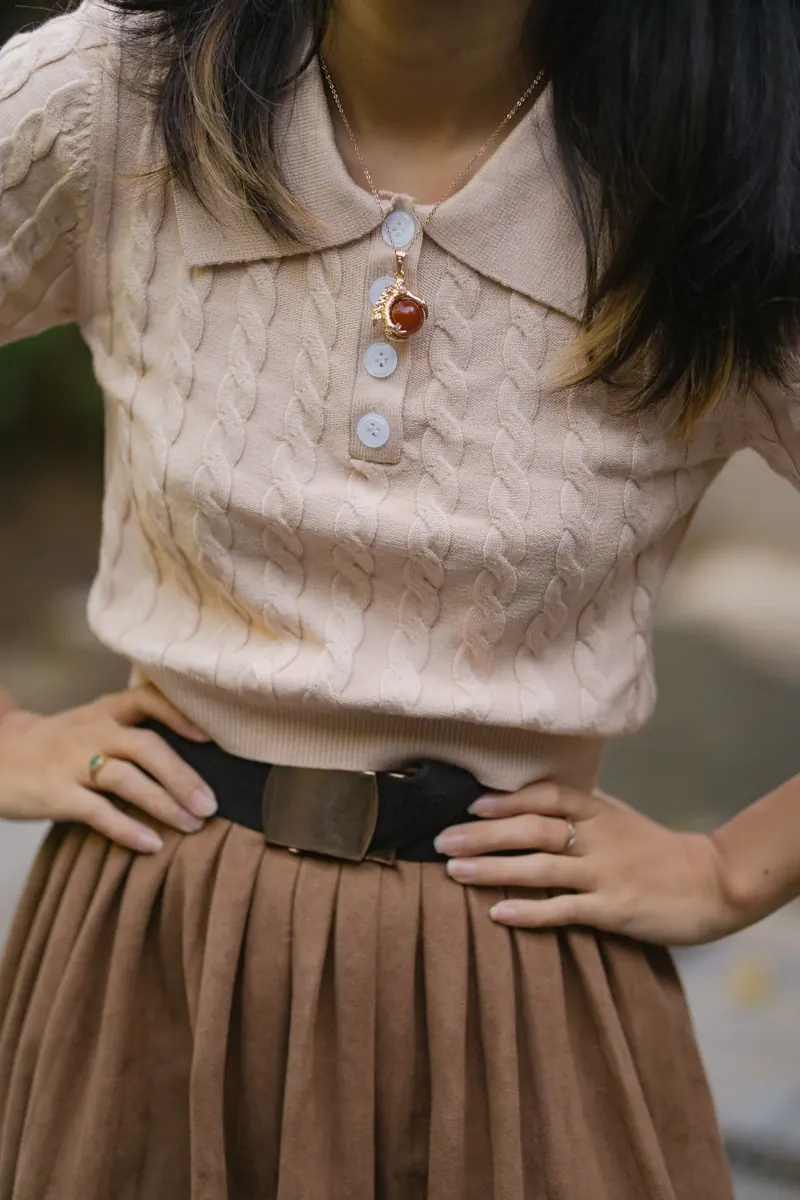
The fastest way to make an outfit look intentional is to choose one statement accessory and let everything else stay quiet. A single bold piece, such as a sculptural necklace, a wide belt, an oversized bag, or a strong pair of earrings, carries the visual weight of the look. When you add a second or third competing piece, the eye has nowhere to rest and the outfit starts to feel busy rather than curated. This guide explains how to pick that one piece, how to position it on the body, how to decide what gets quieted, and where the approach can fail.
The problem: too many good pieces
Most wardrobes contain several accessories that are individually appealing. A chunky ring, a printed scarf, a patterned bag, and a layered necklace may each look good on a hanger. Worn together, they often compete. The problem is rarely taste. It is hierarchy. Without a clear focal point, the outfit reads as a collection of decisions made separately instead of one decision made well.
The statement-accessory approach solves this by assigning roles. One item is the subject; everything else is supporting cast. The principle is simple, but applying it takes a few specific habits.
What counts as a statement accessory
A statement accessory is defined by visual dominance rather than price or brand. Useful categories include:
- Scale: an unusually large bag, belt, earring, or pendant that occupies more visual space than standard versions.
- Shape: a distinctive silhouette, such as an asymmetric earring or a geometric buckle, that reads from a distance.
- Colour contrast: a single saturated colour against a neutral base.
- Texture: a dimensional surface such as braided leather, beading, or heavy metal chain.
A useful test: could you identify the piece from across a room? If not, it is probably a supporting accessory, which is valuable but does not lead.
A five-step method for choosing the piece
1. Start from the garments you already wear most
Choose the statement piece to suit your recurring outfits, not an idealised one. If most of your week is built around plain knitwear and straight trousers, a sculptural necklace may suit those looks better than a dramatic cape-style coat. Review the last two weeks of outfits and note the base pieces that repeat.
2. Match the piece’s visual weight to the base outfit
A heavy, high-contrast accessory needs a calm base to stand out. Conversely, a delicate accessory worn over a busy print will disappear. Match weight to weight: a bold piece over a simple, low-texture outfit; a textured piece over a smoother fabric. This is a question of contrast, not of formality.
3. Decide where the eye should land
Accessories work best at a single point of the body: the neckline, the waist, the hand, the shoulder, or the ear. Choose one. A statement necklace over a plain neckline is clear; the same necklace plus a dramatic belt plus a patterned bag divides attention across three zones. If you want an accessory at the waist, keep the neck and hands clean.
4. Quiet everything else deliberately
This is the step most people skip. Once the statement piece is chosen, reduce other elements in three ways:
- Keep other accessories to one tone family, such as metal or leather.
- Use plain bags, shoes, and outerwear when the feature is jewellery.
- Avoid additional pattern or high-contrast colour outside the statement item.
5. Check the outfit from a distance
Stand three to four metres away and look at the outfit in a mirror or photograph. If the statement piece is the first thing you see, the hierarchy works. If your eye jumps elsewhere first, remove or quiet the competing element.
Worked example
Illustrative example, not a recommendation of any product: Imagine a navy knit dress, black tights, and flat ankle boots. The base is simple and low in texture. A wide, structured black leather belt with a large square buckle becomes the statement piece at the waist. To keep the hierarchy, the wearer uses a plain black shoulder bag, small stud earrings in matte metal, and a watch with a thin strap. The belt draws the eye to the waist; the small earrings and watch reinforce the metal tone without competing. Remove the buckle’s metal finish but keep the buckle itself, and the outfit still reads as one focal point.
Now change one variable. Replace the plain bag with a bag in bright print. The outfit now has two focal points, and the belt loses force. The fix is to return the bag to a neutral tone rather than to remove the belt.
Trade-offs and limitations
- Versatility narrows. A very distinctive piece may suit fewer outfits. Plan for two or three base combinations it works with.
- Repetition shows. Wearing the same statement piece every day can make it read as a signature, which is desirable for some and tiring for others.
- Context matters. A strong accessory may be inappropriate for some workplaces, ceremonies, or cultural settings. Judge the room first.
- Comfort and function. Large or heavy pieces can shift, snag, or tire the wearer. Test them over a full day before relying on them.
Common mistakes
- Choosing the statement piece after the outfit is complete, which leaves no room to quiet competing items.
- Treating three medium-sized pieces as if they were one bold piece.
- Using a statement accessory over an already busy garment, such as a heavily printed dress.
- Ignoring fit. A dramatic piece that sits badly on the body looks accidental regardless of its design.
- Mixing metal tones and colour families without a clear reason, which fragments the look.
A quick decision table
| Base outfit | Suitable statement area | What to quiet |
|---|---|---|
| Plain knit and trousers | Neckline or waist | Bag, shoes, other jewellery |
| Tailored suit, neutral | Shoulder bag or earrings | Tie, pocket details, watch |
| Printed dress | Belt or shoes, plain tone | Bag, extra jewellery |
| Textured coat | Hand or ear, small and sharp | Scarf, bag strap |
Questions to ask before you buy or wear
- Which two outfits from last week would this piece improve?
- Where on my body would it sit as the focal point?
- What single accessory would I remove to make room for it?
For a broader look at how colour and pattern interact with a focal item, see the related guide on mixing patterns by scale and visual weight. For accessories that also help with proportion, the guide on using outfit proportions without rigid body rules offers complementary reasoning. Background reading on textile care may help when a statement piece is leather, metal-finished, or beaded, but always follow the care instructions on the specific item rather than general guidance.
Related resources
Cover: Pexels photograph, used as an editorial illustration. Stock models and products shown do not imply endorsement or independent product testing. Image license.