Editorial note: This is a practical planning guide based on comparison criteria and published care and collection references. It is not a hands-on product test.
The fastest way to build a better airport outfit is to start from the journey itself rather than from a photograph. A travel outfit has to survive a cold cabin, a long walk to the gate, a security tray, a crowded seat and possibly a meeting after landing. When people get this wrong, the usual problem is not style. It is that a jacket is too warm to wear through the terminal, shoes that looked fine in a mirror start to pinch by the third hour, or a pocket that was ideal for a phone becomes a discomfort against the hip when seated. This guide gives you a method for choosing the outfit around those realities, then checking it before you leave.
Start with the route, not the mood board
Write down three facts before choosing anything: the coldest part of the journey, the longest continuous walk and what happens in the first hour after arrival. Those three answers decide most of the outfit. A short domestic flight with a fifteen-minute walk to the gate needs very different choices from an overnight connection with a hotel check-in in the morning.
Here is a simple way to turn those answers into decisions:
- Cold cabin or cold destination? If you will sit in a cool cabin, a light layer that stays on the shoulders is enough. If your destination is far colder, the warmest piece may need to be your personal-item layer rather than what you wear through the airport.
- Longest walk? Shoes and trouser length matter more than any other single decision. Plan around the longest continuous walk you expect, not the average.
- First hour after landing? If you have a meeting, dinner or a check-in with a bag, one fresh top or a more structured layer packed near the top of your bag may matter more than a fully coordinated travel look.
Build layers that work separately
A layer is only useful if you can remove it without unpacking your bag or looking like you are wearing your entire wardrobe. Choose a base top you would be comfortable wearing alone. Add one outer layer that can be taken off and carried. Keep the total set light enough to walk in for an hour without thinking about it.
Before you leave, put the complete set on together and check the fit. Lift your arms, reach forward and check whether the shoulder seams sit where they should. Look at what happens when the outer layer is over the middle layer: if it bunches at the waist or pulls the base top upward, change one piece. The simplest layering arrangement is usually a fine base, a zip overshirt or cardigan, and a lightweight outer jacket. You do not need all three in every trip.
| Route situation | Base layer | Middle layer | Where the warmest piece goes |
|---|---|---|---|
| Short flight, mild departure | Easy shirt or fine knit | Optional zip layer | Carried in the personal item |
| Cold-cabin overnight flight | Smooth tee or fine base | Cardigan worn for the flight | Worn on board, then folded into the bag |
| Warm arrival after cold departure | Breathable base | Light overshirt | Removed after security and packed for the trip |
Run the ten-minute seated test
At home, wear the complete outfit for ten minutes while seated, then stand up and walk up a flight of stairs. Most travel discomfort appears after sitting, not while standing in front of a mirror. Watch for these specific problems:
- A waistband that digs in when you sit down, especially with a structured belt or a low-rise trouser.
- A pocket that presses on the hip. Phones, keys and cards in the front pocket are a common cause.
- Trouser hems that drag under the heel of a flat shoe or bunch around the ankle.
- Shoes that rub after the first ten minutes of standing up and sitting back down.
Make the fix before the trip. Move heavy objects out of back pockets, switch to a longer or shorter trouser length if you plan to wear a different shoe after landing, and avoid anything that needs constant adjustment.
Choose shoes for the longest walk
Wear shoes you already know. A new pair that has not been walked in can produce blisters on a travel day, when you have the least flexibility to change. Test them in the socks you plan to wear on the flight, not a thinner pair you would wear at home.
Check three features: the fastening, the grip on the floor and the space around your toes. Easy-on, easy-off shoes can make the security queue simpler, but screening procedures differ by airport and programme, so check your departure airport’s current guidance. A shoe that is easy to remove but unstable on wet floors is a poor trade. If you plan to wear a second pair after landing, keep it in an accessible place and check its height against your trousers.
Example: A traveller planning a morning meeting after an overnight flight wears trousers with a 30-inch inseam (hypothetical example) and a pair of shoes with a thicker sole. The hem looks fine in the mirror but drags when the traveller walks in the terminal. The fix is to change the trousers or shoes before departure, not to wait until arrival.
Give every essential a reachable home
Your personal item should hold anything you need during the journey: travel documents, medication, a phone charger, a small layer and whatever you might need if the checked bag is delayed. Put these items where you can reach them without opening the main compartment.
Load the bag, then test it on both shoulders. Walk for five minutes with it. Check whether the strap slips off your jacket or pulls at the collar. A pale bag may look neat in a photograph but can show floor marks more readily. A bag with a wipeable base can be more practical than one with a delicate finish. Check your airline's current cabin-bag dimensions before departure, because rules vary and change.
Two examples from the same formula
Example one: a daytime city trip. A traveller takes an easy shirt over a smooth tee, relaxed trousers and familiar walking shoes. The shirt is worn for the flight and packed when the traveller reaches the hotel. The look still works after the shirt comes off because the tee and trousers form a complete outfit.
Example two: a colder route with a warm arrival. A traveller wears a fine base top, a cardigan and a light coat for a cool departure. The cardigan is kept accessible in the personal item, and the coat is folded into the bag after security. On arrival, the traveller has one fresh top packed near the top of the bag for the meeting rather than carrying a second complete outfit.
Both examples depend on keeping the colours close enough that removing a layer still leaves a complete look. The point is not coordination for its own sake. It is making sure a layer can come off without making the rest of the outfit look accidental.
Common mistakes
- Wearing the warmest piece through the terminal. A heavy coat is usually easier to carry than to wear for a long walk.
- Choosing shoes for appearance alone. Shoes that look right but do not grip or fit are a poor choice for a long travel day.
- Overloading pockets. A bulky phone, keys and wallet can distort a jacket and dig into your hips when seated.
- Packing two outfits when one fresh top is enough. A second complete outfit takes space that is often better used for essentials.
The departure check
Lay out the outfit beside the packed bag and look at them together. Remove any accessory that catches on straps, needs repeated adjustment or requires its own protective case. Keep one deliberate detail if it earns its place, such as a scarf that does not tangle or an overshirt with a good fit. The result you want is an outfit you can sit, walk and carry luggage in without constant attention.
Two questions are worth asking before you leave:
- Can I remove my warmest layer without unpacking the bag?
- Will my shoes still feel right after the longest walk I expect?
If the answer to either question is no, change one piece now rather than discovering the problem in the terminal. For luggage choices, read our weekend-bag guide, and for a longer work trip, use the conference packing checklist.
Continue reading
- How to Choose a Weekend Bag: Capacity, Carry Comfort and Useful Pockets
- A Three-Day Conference Packing List That Fits Your Actual Schedule
- The Photo-Ready Travel Layering System
Prepared by Top Cool People Editorial. This guidance is based on practical comparison criteria and does not imply personal testing or celebrity endorsement.
Related resources
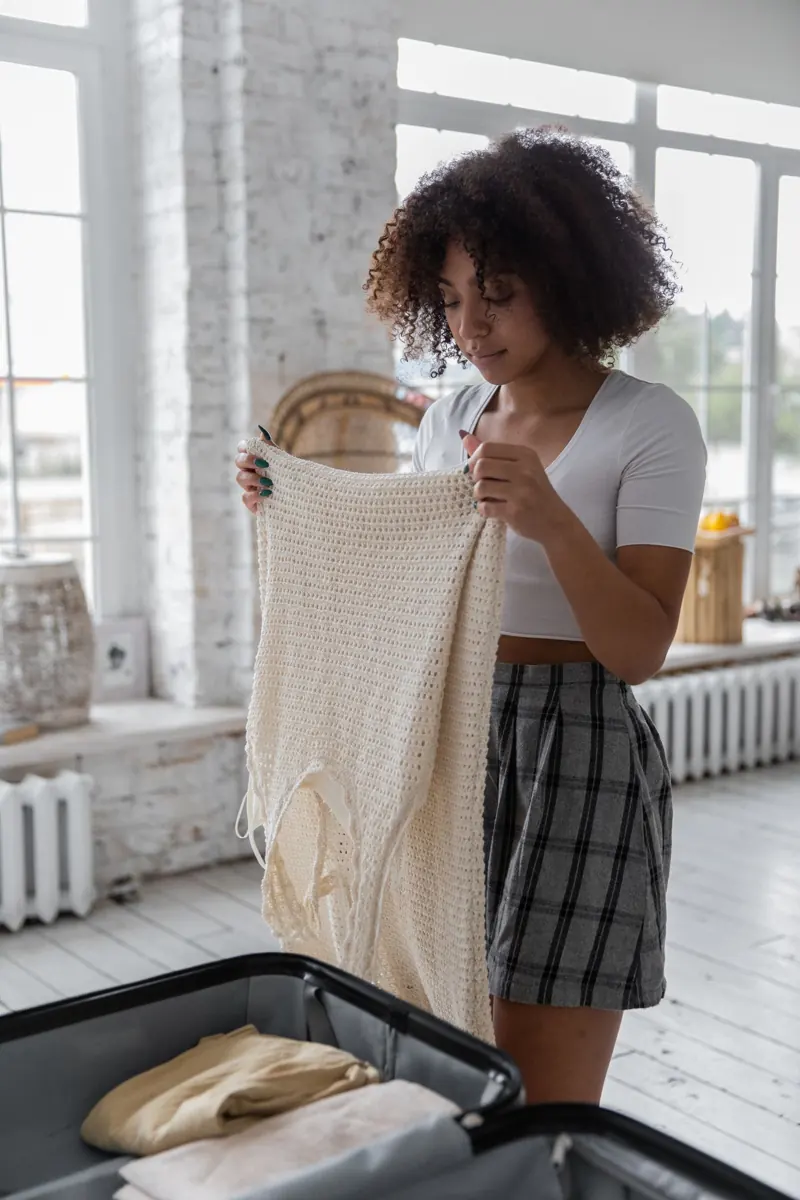
Cover: Pexels photograph, used as an editorial illustration. Stock models and products shown do not imply endorsement or independent product testing. Image license.