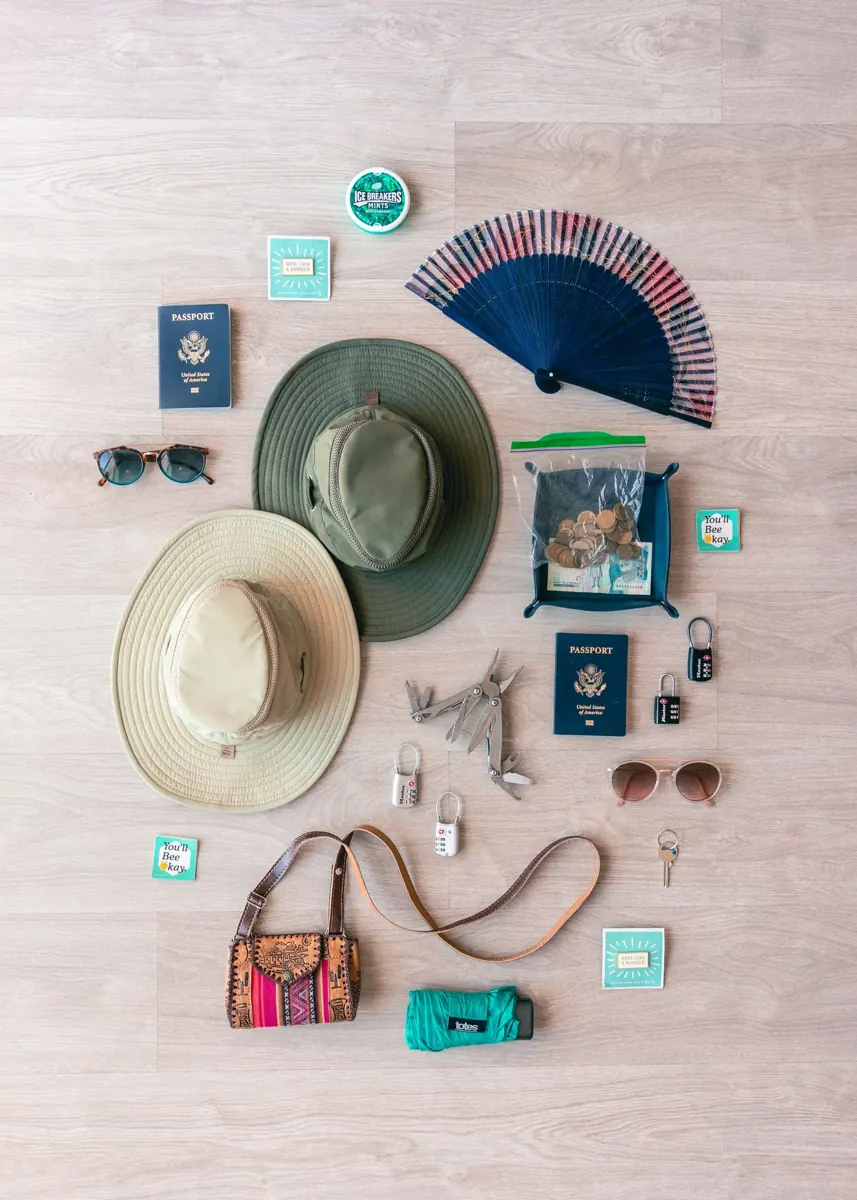
The most useful backup kit for a long day in public is small, predictable and tied to the failures you are most likely to face: a dead phone, a spill, a blister, a sudden change of weather, or a forgotten detail that makes you look unprepared. The goal is not to carry everything. It is to carry the few items that prevent a minor problem from consuming your afternoon.
A day that starts at 8 a.m. with a train, a morning meeting, a lunch that runs long, an event in the evening and a commute home can expose every gap in your preparation. Each gap feels small on its own. Together they produce visible stress: searching for a charger in a bag, asking a stranger for a tissue, limping through shoes that were never meant for eight hours of walking. Backup items are the quiet fixes that keep you composed.
Start with your failure list, not a shopping list
Before buying or packing anything, write down the three to five things that have actually gone wrong on your long days in the past two months. Be specific. “Phone died at 4 p.m.” is more useful than “tech problems.” Common categories include:
- Power: battery drain, a cable that stopped working, no outlet nearby.
- Body comfort: headache, blisters, dry lips, a sore throat from air conditioning.
- Spills and marks: coffee on a shirt, ink on a cuff, food on a tie.
- Information: a missing address, an unsaved document, a forgotten name.
- Weather and environment: sudden rain, cold rooms, sun exposure.
This list is the real specification for your kit. If you have never had a blister, a blister patch is clutter. If your phone dies every afternoon, a charger is not optional.
A worked example
Hypothetical example: Imagine a designer who spends Tuesday moving between a client studio, a lunch meeting across town and an evening panel. Over the past month she has had three problems: her phone reached 9 percent before a call, she spilled espresso on a light jacket before a presentation, and a pair of new shoes caused a blister by 2 p.m. Her backup kit would therefore prioritize a compact power solution, a stain wipe and a blister patch. A spare toothbrush or a full sewing kit would be lower priority, because none of those problems occurred.
Notice what she did not do: she did not buy a tool for every imaginable scenario. She built the kit from her own record of friction.
The core categories
Power and connectivity
Carry one charging cable that matches your primary device and one small power source you can use without a wall outlet. Keep the cable in an easy pocket rather than deep in the bag. Check that the cable is long enough to reach a seat in a typical café or waiting area; a cable that only reaches a counter is less useful than it looks. Also keep a written note of the one or two contacts you would need if your phone died completely, so you are not relying on memory or on a device you cannot open.
Stain and fabric care
A stain wipe or a single pre-moistened cloth handles most incidents on the day itself. Blot rather than rub, and test on a hidden seam if the fabric is delicate. Do not expect a travel wipe to remove everything. Its job is to stop a spreading mark until you can treat it properly. Check the garment care label before using any product, especially on wool, silk or structured tailoring.
Body comfort
Keep a blister patch, a basic over-the-counter pain relief product you already use and tolerate, a lip balm, and a small hand cream. Check the labels for ingredients you know you react to. If you take any regular medication, carry the dose you need rather than the whole supply. Do not treat this kit as a substitute for medical advice; if a symptom is severe or persistent, the right move is to seek care rather than improvise.
Grooming and appearance
One compact grooming tool solves most visible problems: a comb, a small lint roller, or a travel brush. Choose the tool that addresses your actual issue. A lint roller is useful for dark wool; a comb is more useful for hair that flattens by afternoon. Avoid carrying an entire routine.
Information
Many long-day failures are informational. Keep a short written schedule with addresses, room numbers and names, either in a notebook or a note on your phone that is saved offline. Screenshot the one booking reference you cannot afford to lose. This costs nothing and removes a surprising amount of stress.
Comparison table
| Problem | Backup item | Main limitation |
|---|---|---|
| Phone dies | Cable and compact power source | Needs charging time before it helps |
| Spill on clothing | Stain wipe | Cannot fully remove set-in or delicate stains |
| Blister | Blister patch | Works best applied early |
| Dry air or dry lips | Lip balm | Only addresses surface comfort |
| Flattened hair or lint | Comb or lint roller | Does not fix structural wrinkles |
| Missing details | Offline schedule | Requires updating before the day |
Common mistakes
- Packing for the rare disaster. A full sewing kit feels responsible but usually sits unused.
- Hiding the essentials. If the charger is at the bottom of a bag, it will not help when you need it.
- Using expired or untested products. Check dates and test small items before relying on them.
- Forgetting to restock. A used wipe or an empty balm is not a kit.
- Ignoring the bag itself. A bag that cannot hold your kit without crushing your laptop will be left at home. For guidance on capacity and pockets, see our separate weekend bag guide.
Trade-offs to consider
Every item adds weight and bulk. A larger power source charges more but takes more space. A bigger grooming kit covers more situations but is less likely to be packed daily. The right balance depends on how often you carry the bag and how far you walk. If you change bags often, a small pouch that moves between them is more practical than a single fixed kit.
There is also a question of social signalling. A visibly organized kit can look calm and considered, but a kit that is dumped on a table for everyone to see can read as anxious. Keep the pouch closed, and only reach for it when needed.
Limitations of this approach
This is editorial guidance based on common categories of friction, not a test of individual products. Your own failure list should override any general suggestion here. Some situations, such as a medical emergency, a serious injury or a security incident, need professional help rather than a pouch of supplies.
Questions to ask before you pack
- Which two problems cost me the most time or composure last month?
- Can I reach each essential without unpacking the whole bag?
- Will this item still work after a full day in my bag, or does it need care?
Final checklist
Keep the kit to six or seven items: one charging cable, one compact power source, one stain wipe, one blister patch, one lip balm, one grooming tool, and an offline schedule. Review it every two or three months against your actual failures. Replace anything that is empty, expired or no longer solving a real problem.
Cover: Pexels photograph, used as an editorial illustration. Stock models and products shown do not imply endorsement or independent product testing. Image license.