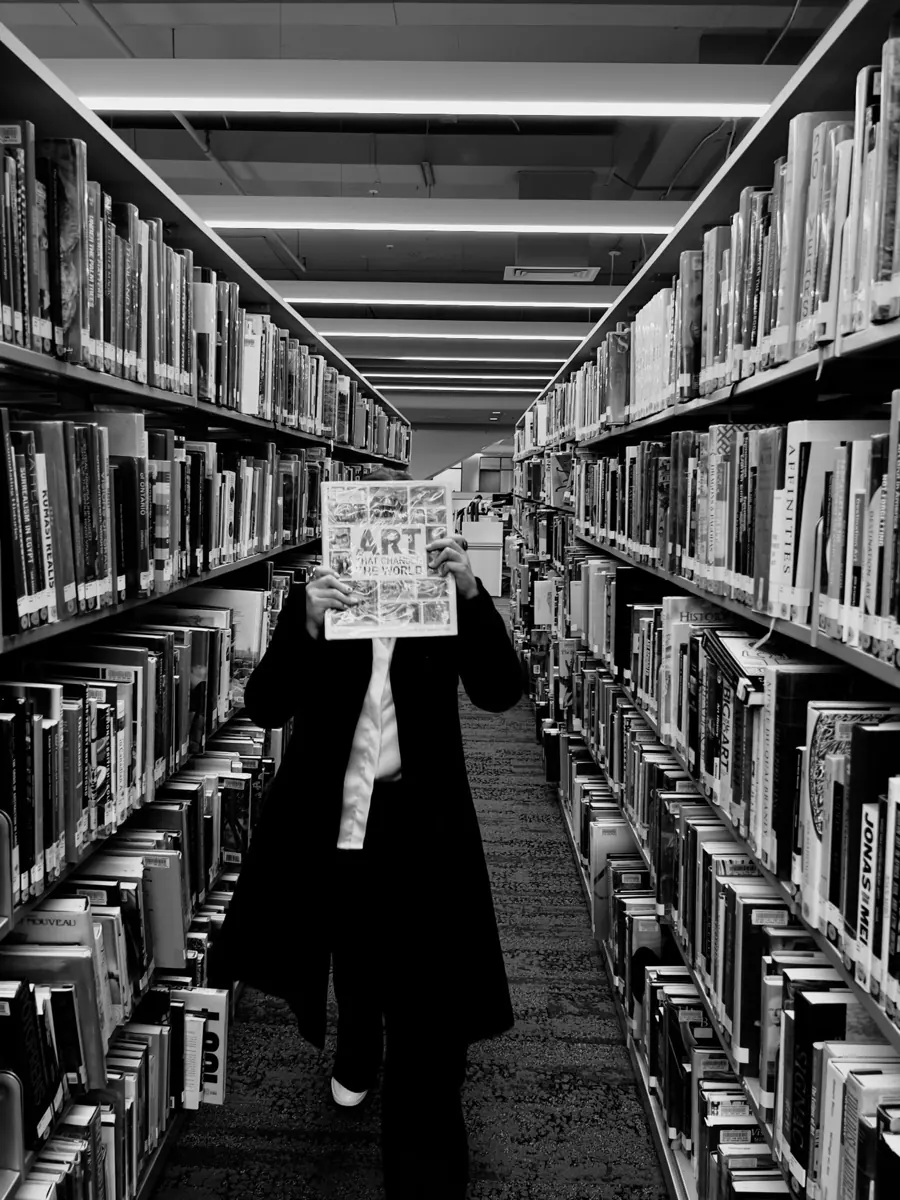
A good coffee table book earns its place by being opened. The practical test is simple: will someone pick it up, turn a few pages, and start talking about what they see? Most shelf-styling advice focuses on looks, but a book that only signals taste and never gets touched becomes decor in the worst sense. This guide works through the questions readers usually ask when choosing one, and it treats the decision as a question of fit: the room, the people who use it, and the conversations you want it to support.
Why do most coffee table books sit unopened?
The usual reason is that the book was chosen for how it looks on a shelf rather than for what it offers once it is in someone’s hands. Large-format photography books are often the worst offenders. They are heavy, awkward to hold on a sofa, and difficult to read at a comfortable distance. A book that needs to be propped open on a table is less likely to be explored casually.
A second common mistake is choosing a subject nobody in the household cares about. A dense monograph on mid-century Scandinavian ceramics might be a perfect fit for one person and invisible to everyone else. The coffee table is a shared surface, so the test is whether the subject has enough entry points for guests who arrive with no prior interest.
How should I decide what subject to choose?
Start with the room rather than the trend. Look at what is already on the table and nearby shelves: plants, ceramics, a record player, a particular color palette. A book that echoes one of those elements tends to look intentional. A book that fights them tends to look like an afterthought.
Then consider the likely visitors. A living room used for family evenings may suit a book with short, visual sections that children and adults can browse together. A studio or office space may suit a book about process, craft, or design history that gives visitors something to discuss with you. A guest room may call for something lighter that a stranger can flip through while waiting.
| Room or situation | Useful book qualities | Common mismatch |
|---|---|---|
| Living room used daily | Short sections, strong images, easy to pick up | Heavy monograph that stays closed |
| Home office or studio | Process, craft, or design history to discuss | Purely decorative book with no talking points |
| Guest space | Light, browsable, not demanding | Dense text requiring a quiet hour |
| Small table | Modest format that leaves room for objects | Oversized book that dominates the surface |
What makes a book good for conversation?
Conversation comes from specificity and open questions. A book with a clear theme, a surprising detail, or a small story attached to each image gives people something to react to. A book that is only beautiful gives them very little beyond “this is nice.”
Look for books that reward partial reading. You want a book where opening it at random produces something worth a sentence of comment. Collections organized as short essays, timelines, or image sequences often do this better than a single long argument, because a reader can join in at any point.
Be cautious with books whose appeal depends on knowing the artist, the photographer, or the cultural moment in advance. These can work for a specialist audience but tend to leave other guests nodding politely rather than engaging.
How do I check the physical side before buying?
- Weight and size: Imagine holding it on a sofa with one hand. If that feels unreasonable, the book will likely stay on the table rather than travel to a lap.
- Binding: Check whether the book lies flat when open. Tight bindings can crack or force the spine, which discourages browsing.
- Print quality: If the book is image-led, look at how the photographs or illustrations reproduce on the page. Dull or muddy reproduction undermines the reason for choosing the book.
- Text size: If there is captioning or commentary, make sure it is readable at a normal distance.
- Cover durability: Coffee table books get handled. A cover that marks easily or lifts at the corners will look worn within months.
What are the trade-offs between large and small formats?
Large-format books can make a strong visual statement and suit images that need space. Their cost is handling and storage: they are harder to move, can overwhelm small tables, and are awkward to read comfortably. Smaller formats are easier to browse and fit into more spaces, though they can feel less impressive on display. Neither is better in general. The right choice depends on whether the book’s main job is to be seen or to be read.
A useful example: imagine a household with a narrow coffee table and a habit of reading on the sofa. A medium-format book of around the size of a paperback-plus, with one image and short paragraph per spread, would likely get more use than a large atlas-style volume. This is an illustrative scenario, not a rule, but it shows how the physical choice follows from the expected use.
How do I keep the book from becoming decor?
Rotate it. Keep one or two books on the table at a time and swap them every few months, so the surface stays fresh and the chosen book stays in view long enough to be opened. Leave it slightly open or place a small object on a spread to invite someone to look. Keep a bookmark or card nearby with a question about the book, which gives visitors a way in without requiring a speech.
Avoid stacking books so high that the top one is the only one anyone sees. Avoid placing them where they cannot be reached comfortably from a seat. These small details determine whether a book gets handled.
Common mistakes to avoid
- Choosing by cover alone without checking how the interior reads.
- Buying a subject you find interesting but no one else in the home will open.
- Ignoring the table’s real dimensions and how much space the book leaves for everyday objects.
- Keeping the same book out for years until it becomes invisible.
- Treating a book as a finished style statement rather than a conversation starter.
Where to see books in person
Questions to ask before you buy
Will someone who knows nothing about this subject still find an entry point? Does the book fit the table and the room’s existing objects? Will it survive being handled on a sofa? If the answers are yes, the book is likely to earn its space.
Cover: Pexels photograph, used as an editorial illustration. Stock models and products shown do not imply endorsement or independent product testing. Image license.