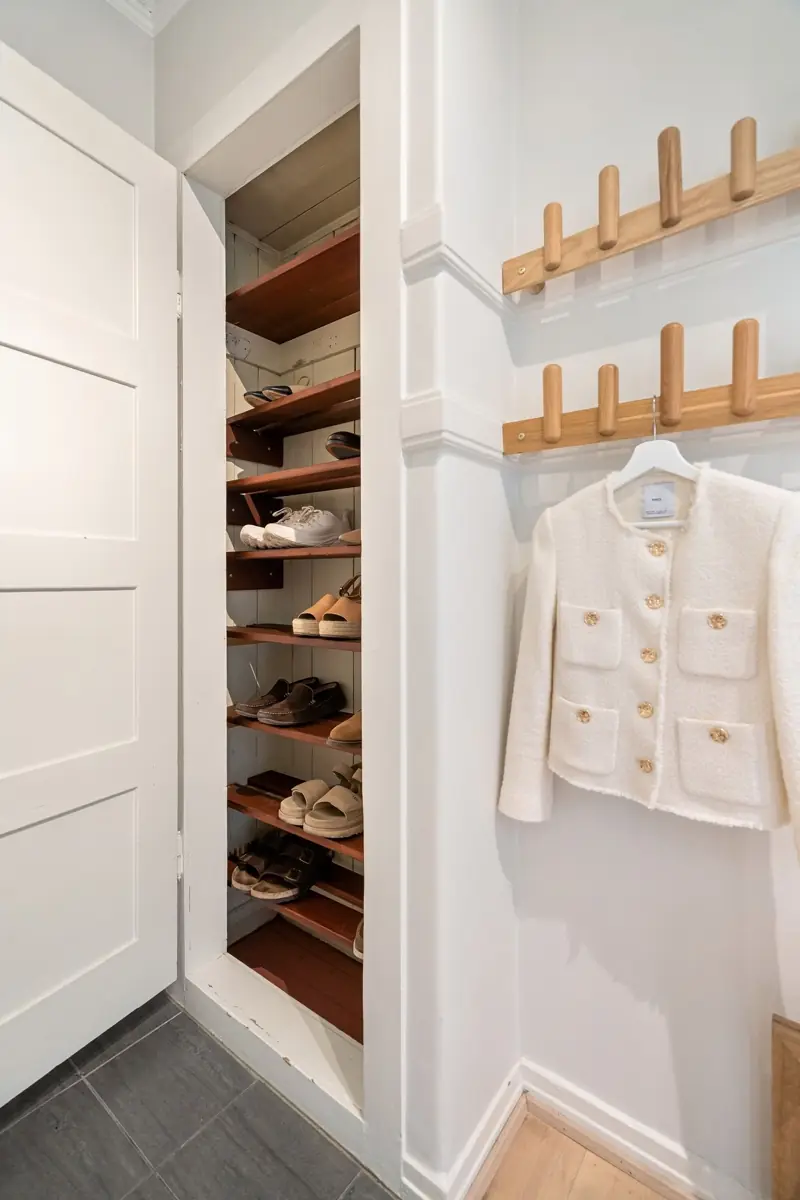
Looking intentional rarely comes from owning more. It usually comes from owning fewer things that each do a clear job, and from knowing why each one is in your bag, on your desk, or in your closet before you ever reach for a new one. If you have ever bought a jacket, a notebook, or a charger because it looked right in a shop, only to find it sitting unused after three weeks, you have met the core problem this guide addresses: buying for an imagined version of your life instead of the one you actually live.
The approach below is a practical walkthrough. It works for clothing, tech, bags, desk tools, and small personal items alike. It does not ask you to become a minimalist or to throw things away. It asks you to name the gap, measure how often the gap appears, and check whether the purchase earns its place against what you already own.
Start with a routine audit, not a wish list
Most impulse purchases begin with a mood: a feeling that your things look scattered, that a space feels unfinished, or that you need to be more prepared. The problem is that mood is a poor guide to what you need. A better starting point is a short audit of what your week actually contains.
For one week, keep a plain note of the places you go, the tasks you do with your hands, and the moments when you felt slightly underequipped. Do not judge the notes. You are collecting evidence. Common entries look like this: the commute involves standing on a crowded train with a laptop; the client calls happen from a kitchen table with poor lighting; the weekend trips require one bag that must hold a change of clothes, a charger, and a book.
At the end of the week, group the entries into three categories:
- Frequent friction: things that happen several times a week and cause real annoyance.
- Occasional gaps: things that matter a few times a month or for specific events.
- Imagined needs: things you would like for a life you are considering but do not yet live.
Only the first category should drive purchases in the near term. The second can wait for a clear event. The third belongs on a list you revisit in three months, not in a shopping cart.
Write the job, the frequency, and the replacement
Before you buy anything, complete a three-line statement. This is the single most useful habit in intentional buying, and it takes about two minutes.
- The job: What specific task will this item perform? “Look nicer” is not a job. “Carry a laptop, a charger, and a notebook across two transit legs without the bag sagging” is a job.
- The frequency: How many times in a typical month will you use it? Be conservative. If the honest answer is “maybe twice,” the item needs a very strong reason.
- The replacement: Which existing item does this replace, and what will happen to that item? If nothing is replaced, you are adding to the pile, which is acceptable only if the job is new and important.
If you cannot complete all three lines honestly, pause. Many purchases fail at the replacement step. A new bag that does not replace an old one simply creates a second bag to choose between each morning, which reduces intentionality rather than increasing it.
Illustrative example
Hypothetical example: A reader who works partly from cafés and partly from home wants a more polished look for video calls. Their wish list includes a new lamp, a camera stand, a second monitor, and a set of notebooks. Their weekly notes show that the real friction is poor light in the late afternoon and a desk that is too cluttered to use comfortably. The lamp fixes the light problem. Clearing the desk fixes the clutter problem. The camera stand and second monitor would mostly sit unused. The reader buys the lamp, removes two unused cables and a stack of old papers, and waits. Six weeks later they still do not feel the need for the monitor, so it stays off the list.
Compare the purchase against what you already own
Once the job is clear, look at your current inventory for that category. The goal is not to make a complete catalogue but to answer one question: is there something close enough that a small adjustment would solve the problem?
Consider the common cases:
| Situation | Usually better | Usually worse |
|---|---|---|
| Your current bag fits your gear but feels heavy | Reorganise the contents and remove duplicates | Buying a second bag for the same trips |
| Your workspace looks messy on camera | Clearing surfaces and adjusting lighting | Buying decorative objects to cover the mess |
| You own many notebooks but never finish one | Using one system consistently for a month | Buying a more attractive notebook |
| Your wardrobe feels repetitive | Tailoring, re-combining, or adding one versatile layer | Buying several trend pieces that work only together |
The point of this comparison is not to avoid spending money altogether. It is to make sure that when you do spend, you are solving a verified problem. Adjustments are cheap, reversible, and informative. If a small change does not fix the problem after a reasonable trial, you have better evidence for a purchase.
Check the practical details before you buy
Intentional items tend to share a few practical traits. They fit the routine, they are easy to maintain, and they do not require a special ritual to use. Before committing, check the following.
Fit to the routine
Think about the specific places the item will go. A bag that looks elegant may not fit under an airplane seat or on a crowded train. A desk tool that works on a large table may not suit a small kitchen counter. Measure the spaces you actually use, and write the numbers down before you shop.
Maintenance and upkeep
Ask what the item needs to stay in good condition. Some materials need regular cleaning or protection; some devices depend on charging habits or replaceable parts. An item that needs constant attention can quietly undermine the calm it was supposed to create. Read care instructions before purchase, not after.
Ergonomic and practical basics for work tools
For travel, the U.S. Transportation Security Administration publishes a travel checklist; check its current guidance for any liquid or carry-on rules that apply to your routes. Even if you are not flying, the underlying lesson applies: review the rules for your common routes before you pack or buy a new bag, so that the item you choose actually works with how you move.
Common mistakes
- Buying the version of yourself you hope to become. A reader who rarely attends formal events does not need a formal bag for “someday.”
- Confusing scarcity with quality. A limited release or small batch is not evidence of fit.
- Ignoring the second purchase. Accessories, cases, chargers and care products can double the real cost of a simple item.
- Skipping the trial period. If you can, use the old item and a borrowed alternative for a week before deciding.
- Assuming neutral means versatile. A neutral item that clashes with your existing colours or schedules still creates friction.
Trade-offs and limitations
This approach has real costs. Waiting and auditing takes time, and it can feel slow when you actually need something soon. Some items are genuinely urgent, such as a broken device or a worn bag you rely on daily. In those cases, prioritise the replacement but still write the three-line statement, because it prevents an urgent need from turning into an unnecessary upgrade.
Intentional buying also does not guarantee that you will look any particular way. Taste is personal, and an edited wardrobe or desk can still feel dull if it no longer reflects you. The goal is clarity, not a fixed aesthetic. If a long-established routine makes you happy, keep it, even if it looks less like a curated feed.
Finally, the research sources cited here address workplace equipment and travel rules, not fashion or style judgments. They can tell you whether a monitor is positioned sensibly or whether a liquid is permitted in a carry-on. They cannot tell you whether a particular jacket suits your face or whether a bag expresses the right personality. Those judgments remain yours.
A short checklist to use before any purchase
- Did the routine audit show this as frequent friction, not an imagined need?
- Can you state the job, the frequency and the replacement in plain sentences?
- Did you check whether a small adjustment to existing items solves the problem?
- Have you measured the spaces and confirmed the item fits your actual routes or desk?
- Do you know what maintenance it needs, and are you willing to do it?
- If you still want it after a waiting period, is the case stronger than when you first thought of it?
Two questions are worth asking yourself as you work through this process:
- Which item in my current routine do I touch every day, and what would make it better rather than replacing it?
- When did I last buy something I still use every week, and what made that purchase work?
Cover: Pexels photograph, used as an editorial illustration. Stock models and products shown do not imply endorsement or independent product testing. Image license.