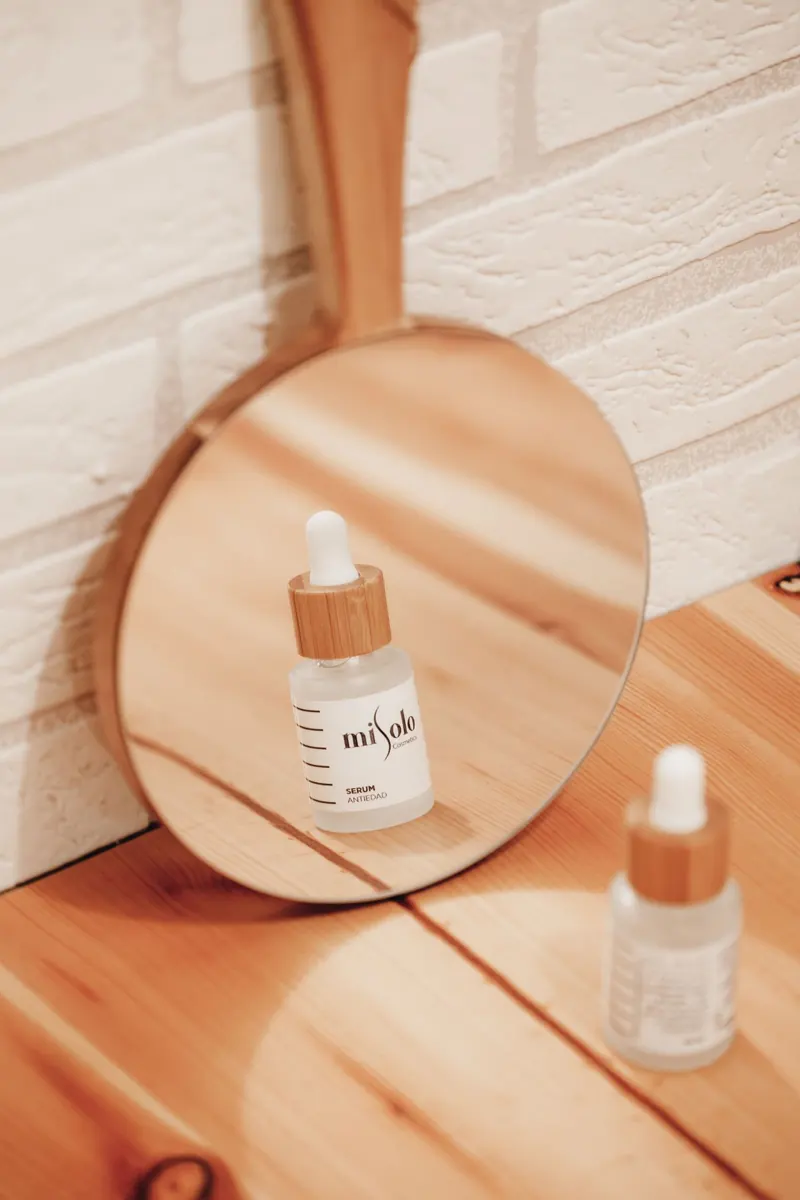
The simplest working system for tracking opened beauty products is a single shared list that records three things for every item: the date you opened it, the period after opening that you intend to use it within, and where it lives in your routine. Without that record, products drift into the back of a drawer, and you end up discovering a half-used jar months after it stopped being the product you remember. This article explains how to set up that record, how to choose between paper, phone and spreadsheet methods, and where the system tends to break down.
opened products quietly accumulate
Most people do not own too many beauty products because they buy carelessly. They own them because they open something, use it for a few weeks, then rotate to a newer item without deciding what happens to the first one. The partly used product stays in a bag, a vanity tray or a travel pouch, and its age becomes invisible. Within a year, a household can have several opened items in overlapping categories: two cleansers, three moisturisers, a set of brushes that have never been cleaned on a schedule.
The problem is not only clutter. Opened products are used in close contact with skin, hair and face, and the containers may be handled many times a day. Makeup brushes can collect product residue, dirt and oil over time, so they benefit from a regular cleaning routine. Check the care instructions for your particular tools for recommended washing frequency. That single piece of guidance shows why tracking matters: a tool that needs a cleaning schedule is also a tool that needs a date on it. Tracking turns a vague sense that something is “probably fine” into a visible decision.
Decide what you are tracking before you choose a method
Start by sorting your collection into three groups. The distinction matters because each group needs a different kind of record.
- Daily-use items such as cleanser, moisturiser, deodorant, foundation, mascara and your primary hairbrush. These need the most attention because they are touched often.
- Occasional items such as a lip product used for events, a setting spray, or a body oil reserved for holidays. These can be tracked more loosely but still need an opened date.
- Tools such as brushes, sponges, combs and applicators. These are not consumed, so the question is not “when will it run out” but “when was it last cleaned and when should it be replaced.”
Tools deserve their own column. A brush can look fine while still holding residue, and a visually clean item can still have been stored damp. Separating tools from consumables prevents you from treating a brush’s “used up” point the same way you would a bottle of toner.
Comparing tracking methods
There is no single correct medium. The right choice depends on how many items you own and how often you check them. The table below compares the three approaches most people use.
| Method | Best for | Main advantage | Main limitation |
|---|---|---|---|
| Paper label on the product | Small collections, people who dislike screens | Visible at the moment of use | Labels fade, peel or get covered by new products |
| Phone note or reminder app | Medium collections, people who already check their phone daily | Can send reminders for cleaning or review dates | Easy to stop opening; entries drift from the physical product |
| Spreadsheet or table | Large collections, households sharing a shelf | Sortable by date, category and status | Needs upkeep; can feel like a chore |
A hybrid often works best: a marked date on the product itself, plus a simple monthly review in whatever list you keep. The label tells you the age at a glance; the list lets you see patterns across the whole shelf.
A step-by-step setup
Step 1: Date everything that is open
Walk through your bathroom, bedroom and bag. For each opened item, write the month and year you opened it directly on the packaging, or on a small label where writing is not practical. If you do not know the date, use the date you first noticed it and mark it as estimated. An estimated date is more useful than none.
Step 2: Record a use-by window you choose yourself
Many products show a period-after-opening symbol on the packaging, though not every product includes one. Where present, follow that guidance. Instead, set your own working window for each category, and write it in your list. The window is a personal rule for when you will stop using an item and reassess it, not a claim about how the product will perform. Keep the windows conservative and consistent, so that a review date is a prompt rather than a debate.
Step 3: Set a cleaning rhythm for tools
For brushes, follow the washing frequency given in the tool’s care instructions, and log the last wash date in the same list. Brush cleaning is only useful if it happens, so tie it to a fixed day, such as the day you change bedding or refill a water bottle.
Step 4: Run a short monthly review
Once a month, read through the list. Remove anything finished, flag anything past its window, and check whether any category has grown beyond what you actually use. The review should take a few minutes. If it takes an hour, the system is too detailed.
Worked example
Consider a hypothetical example. Imagine a person with four opened items: a cleanser opened in March, a moisturiser opened in June, a mascara opened in September, and a set of brushes last washed three weeks earlier. Without tracking, all four would sit on the same shelf looking equally current. With a list, the cleanser and the brushes show up as needing attention in the same review, because one is past its personal window and the other is due for washing. The moisturiser and mascara stay green. The decision becomes concrete: discard or set aside the cleanser, and schedule the brushes for washing that weekend. The example is illustrative only; the windows and categories are chosen by the reader.
Trade-offs and limitations
- A tracking system adds a small ongoing task. If you own very few beauty products, a full spreadsheet is more upkeep than the collection justifies.
- Personal windows are judgement calls. They help you act consistently, but they are not laboratory-tested expiry dates, and you should not treat a list as a substitute for checking a product for visible changes such as separation, odour or unusual texture.
- Shared products complicate the record. If two people use one moisturiser, the opened date is shared but the hygiene habits may not be. Consider whether shared items should exist at all.
- Tracking does not solve overbuying. It makes overbuying visible, which is useful, but the purchasing decision still happens elsewhere.
Common mistakes
- Dating only the new purchases. The older opened items are the ones most likely to be forgotten.
- Keeping the list separate from the products. When the list lives in one app and the bottles live in a drawer, they fall out of sync. Mark the product itself.
- Making windows too long. A window that never triggers a review is not a window.
- Tracking everything with equal detail. Spend effort on daily items and tools; a single line will do for a seasonal item.
- Ignoring the physical signs. Date-based rules should sit alongside a quick look and smell check whenever you reach for a product.
Questions to ask yourself
- Which three items do I use every day, and do they each have a visible date?
- Am I more likely to check a phone or a shelf, and should the record live where I look?
- How many opened items do I have that I have not touched in the past two months?
Related resources
Cover: Pexels photograph, used as an editorial illustration. Stock models and products shown do not imply endorsement or independent product testing. Image license.